
Time
18:00 - 24:00 o'clock
Organizer
Max-Planck-Institut für chemische Ökologie
Place
Foyer, Max-Planck-Institut für chemische Ökologie
Adresse
Hans-Knöll-Straße 8
Insects live in symbiotic relationships with microorganisms that, for example, provide them with nutrients or help them defend against predators. A fascinating example of a defensive symbiosis is that between bee wolves—a genus in the family of digger wasps—and their symbiotic bacteria. The bacteria produce antibiotics for the bee wolves, which they use to protect the larvae in their brood chambers from pathogens in the soil. Learn more about this symbiosis, which has existed for 68 million years!
Bild
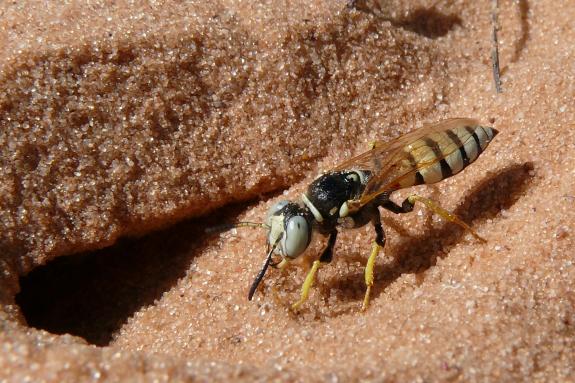
Bienenwolf vor der Bruthöhle
, ©
Martin Kaltenpoth
Location