From gene to natural product
Bacteria and fungi produce a wide variety of different substances. They use these to communicate with other organisms, defend themselves against predators or establish themselves in various habitats. Some of these so-called natural products can also be very useful to humans – for example, as antibiotics or anti-cancer agents. The diversity of microorganisms on Earth is vast, and many species remain completely unexplored.
The genetic material of microorganisms can be interpreted like a blueprint or a treasure map. It provides clues as to whether and how an organism can produce certain natural products. This enables researchers to better understand the function these substances serve for the organism and its environment – and whether they might have medical applications.
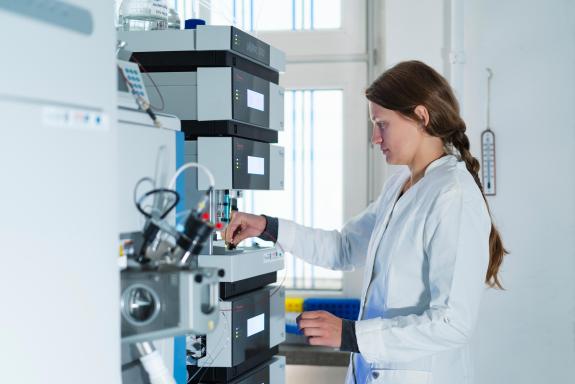
We’ll show you how we go on a treasure hunt using methods from microbiology and molecular biology to explore the fascinating world of microbial natural products.