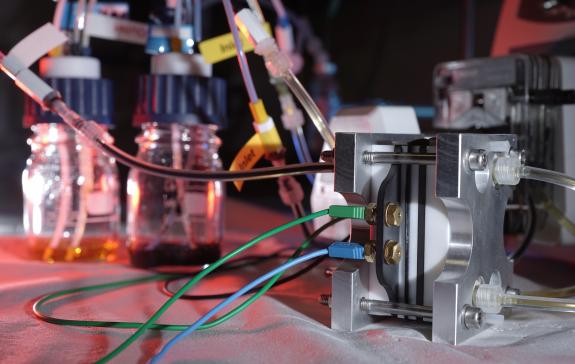
Since 2023, Germany has been generating well over half of its electricity from renewable energy sources—and the trend continues to rise. To ensure we can use electricity from renewable sources even at night or during periods of low sunlight and wind, we need to store the electricity temporarily during times of excess sunlight and wind. To do this, we need rechargeable batteries, of which the lithium-ion battery is arguably the best-known and most widely used technology today. We find them in our smartphones, cordless vacuum cleaners, and other household appliances—and increasingly in our cars as well. In other words, wherever we need electricity away from a power outlet. But are lithium-ion batteries really the best storage technology for storing electricity from entire wind and solar farms? A lesser-known but very promising alternative for this application is the redox flow battery. In this talk, we’ll take a look together—in an easy-to-understand way—at how it works, what makes it special, and how it can help us with the energy transition.
Please note: Due to construction on Lessingstraße, access is via Philosophenweg (across from the cafeteria/Studierendenwerk) or the Steiger/Lessingstraße parking lot (follow the signs). The building can only be entered through the rear entrance.