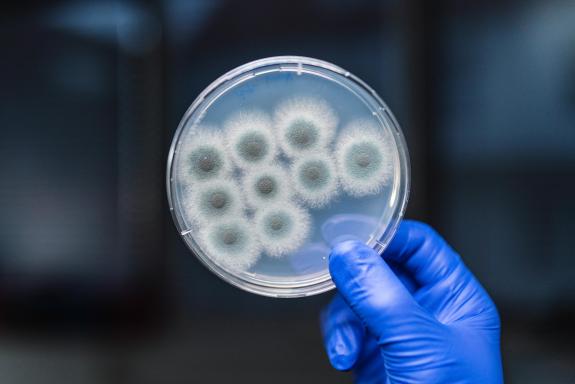
We constantly inhale spores ofAspergillus fumigatus—a pathogenic mold that is found everywhere in our environment. In healthy people, the immune system can usually successfully fight off the fungus. However, in people with weakened immune systems, it can survive in immune cells in the lungs and cause severe infections. Other pathogens also use similar strategies to evade the immune system.
The discovery of antibiotics was one of the greatest breakthroughs in modern medicine and has saved millions of lives. However, their frequent use has contributed to the emergence of antibiotic-resistant pathogens. That is why there is a great need today for new antibiotics and alternative therapeutic approaches.
Antibiotics are small molecules that can specifically inhibit or kill microorganisms. In nature, they are produced by bacteria and fungi, among others, to gain an advantage over competing microorganisms. These molecules are part of the chemical “language” that microorganisms use to communicate with one another. By researching this communication, we can discover new active compounds that could contribute to the treatment of infectious diseases in the future.