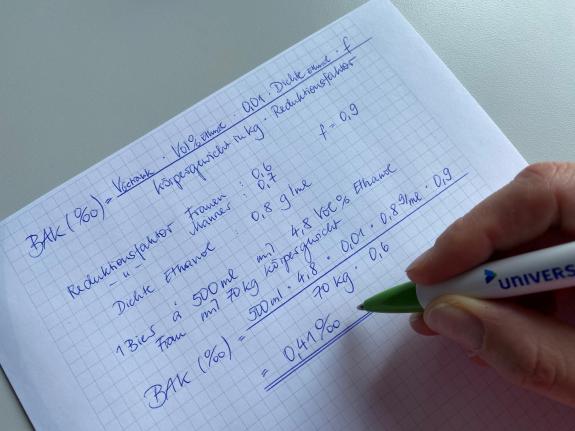
Calculating blood alcohol concentration (BAC) based on reported alcohol consumption is a routine task in forensic alcoholology. For example, this calculation is always performed when suspects in traffic offenses claim to have consumed alcohol after the incident—that is, “post-incident drinking”—and the BAC resulting from such consumption is to be subtracted from the measured BAC. It is also performed when there is a question regarding an alcohol-induced reduction or absence of a suspect’s criminal responsibility or the capacity to act of victims of violence, but no corresponding blood sample is available for alcohol testing.
For such forensic alcohol calculations, the formula developed by Erik Widmark (1889–1945) (see image) is used, which incorporates as variables the mass of alcohol consumed in grams and the so-called reduced body mass in kilograms. The former can be calculated from the volumes and alcohol contents of the alcoholic beverages consumed; the latter from the body mass of the person in question and a constitution-dependent reduction factor. To calculate blood alcohol concentration (BAC) values at a specific point in time, the rate of alcohol metabolism since consumption must also be taken into account.
As part of the course, a lecture will first clearly illustrate how “drinking alcohol” (ethanol) is absorbed into the body after the consumption of alcoholic beverages, distributed throughout the body, and ultimately eliminated. Building on this foundation, the method used in forensic practice to calculate blood alcohol concentration (BAC) based on the amount of alcohol consumed will be introduced and explained using examples.
At the hands-on station, interested visitors will have the opportunity to perform alcohol calculations themselves. Calculator apps available for smartphones are sufficient for this purpose. Alternatively, the calculations can also be performed on a computer using the corresponding data sheets. The staff members on hand are available at any time to provide assistance and explanations, as well as to discuss the results.
Program: Lecture and hands-on activity
Location: Building F2
Times: 11:15 a.m., 8:15 p.m., 10:30 p.m., and 11:15 p.m.
Minimum age for participants: Not suitable for children under 12
For more information, please visit the website of the Toxicology Division at the Institute of Forensic Medicine at the UKJ.