Microorganisms are all around us in our daily lives and colonize our bodies. The human gut, in particular, is home to billions of microorganisms. This complex community is known as the gut microbiome and plays a significant role in maintaining health and the development of diseases. For example, when an imbalance occurs, microorganisms in the microbiome can contribute to the development of conditions ranging from intestinal diseases to sepsis.
One such potential candidate is the yeast Candida albicans. Scientific studies estimate that Candida colonizes 35–70% of all people. While harmless in healthy individuals, the fungus can cause life-threatening infections in immunocompromised patients. Investigating the interactions between C. albicans and other gut microorganisms helps us better understand how the fungus works.
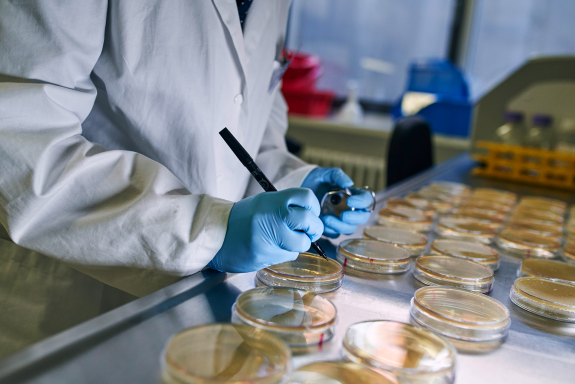
But how can we determine which microbes are thriving on and inside us? And which everyday objects harbor particularly large numbers of microorganisms? We’ll briefly introduce you to the most important methods that help us in the lab understand who lives inside us and how microorganisms interact with one another. Test your knowledge with the “Microbe Quiz, ” marvel at the diversity of microbial cultures under the theme “Making the Invisible Visible, ” and use the “Touch Box” to see if you can identify important lab items by touch.