In its laboratories, rearing chambers, and greenhouses, the Max Planck Institute focuses in particular on researching the interactions between plants and insects. These interactions can vary greatly depending on the specific plant and insect involved. Plant-eating insects destroy enormous amounts of food and raw materials worldwide—resources that are needed all the more in light of a growing global population and stagnant or even shrinking arable land. Countless insect species, in turn, are indispensable to our ecosystems: as pollinators of many plants, or as beneficial insects that successfully keep pests away from our crops.
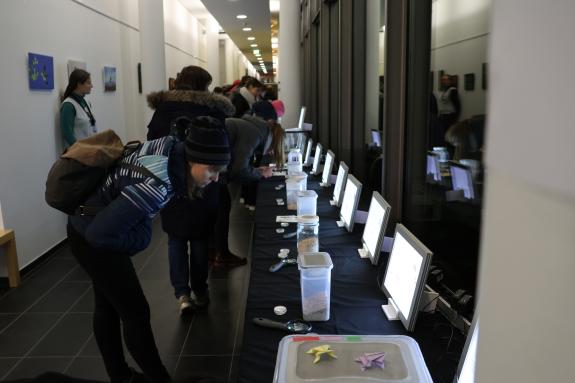
We have dedicated an entire exhibition to our living research subjects and showcase many different species that we are studying. Some of them are not found in Europe at all, but in other parts of the world. Special attention is given to microorganisms, which, as symbiotic partners of insects, play an important role in the insects’ evolutionary success.
Each insect species is presented live and, depending on its developmental stage, as a larva, nymph, or adult (beetle, bug, aphid, butterfly, fly). Brief fact sheets summarize the most important information about their biology, distribution, and other distinctive features. Of course, we also explain why we are researching these particular insects and what makes them so special.