New concepts for batteries, solar cells, CO₂ storage, and “green hydrogen”
How is wood turned into a material for batteries? How can carbon help sequester CO₂? Here, you’ll learn how modern carbon materials are created from renewable raw materials and how they can contribute to sustainable energy storage and a climate-friendly carbon economy.
Numerous booths will feature experiments and exhibits that offer insights into this application-oriented research. These include the structure and function of organic solar cells as well as novel active materials for applications such as button cells and flow batteries. Visitors will see how the electrolysis of water works to produce hydrogen from electricity and how hydrogen can be stored in the form of formic acid. We will also introduce new dyes and catalysts that are expected to enable the production of hydrogen directly from sunlight and water in the future.
Current research topics will be presented and explained to the public via posters. Furthermore, HIPOLE Jena will present the fields in which young talents are being recruited and how one can become part of this research team.
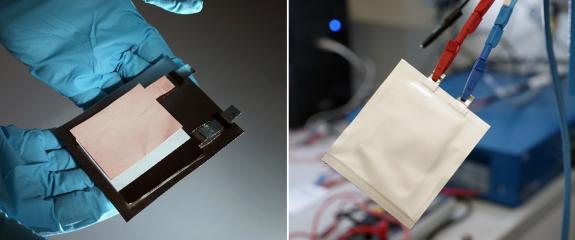
Hydrogen is a central component of the energy transition because it can be produced from renewable energy sources, such as wind or solar power, and stores this energy in chemical form. This “green hydrogen” can then be used in industrial processes (e.g., the production of fertilizers or steel), where it significantly reduces carbon dioxide emissions. The storage of electrical energy is also of great interest, both for portable and stationary applications. The battery systems required for this can be charged either conventionally or by sunlight. Such solar batteries combine a solar cell with a rechargeable battery. An important aspect involves novel battery concepts, including new types of electrode materials and redox flow batteries, which operate entirely without environmentally problematic metal salts and are based on organic active materials. Research in these three areas is conducted at CEEC Jena and HIPOLE Jena.
CEEC: Center for Energy and Environmental Chemistry Jena
HIPOLE: Helmholtz Institute for Polymers in Energy Applications Jena
Please note: Due to construction on Lessingstraße, access is via Philosophenweg (across from the cafeteria/Student Services) or the Steiger/Lessingstraße parking lot (follow the signs). The building can only be entered through the rear entrance.