Ageing research: What a small fish can tell us about ageing
At the Leibniz Institute for Ageing Research – Fritz Lipmann Institute (FLI) in Jena, scientists are getting to the bottom of these questions. To do so, they are using, amongst other things, an extraordinary model organism: the turquoise killifish (Nothobranchius furzeri).
This small African fish has a distinctive feature: it completes its entire life cycle within a few months. Its short lifespan makes it particularly interesting for ageing research. Researchers can observe within a short period of time how the body changes over the course of its life – from development through adulthood to old age. For example, they are investigating how tissues and organs age, which processes contribute to the loss of bodily functions, and which mechanisms can support healthy ageing. The findings help to better understand the fundamental mechanisms of ageing, which may also be relevant to humans.
Specialised animal husbandry is required to enable such research. In the FLI’s fish facility, killifish are kept and bred under controlled conditions. The staff ensure optimal husbandry conditions, a reliable supply of food and the health of the animals. In doing so, they support the scientific work and lay the foundations for meaningful research findings.
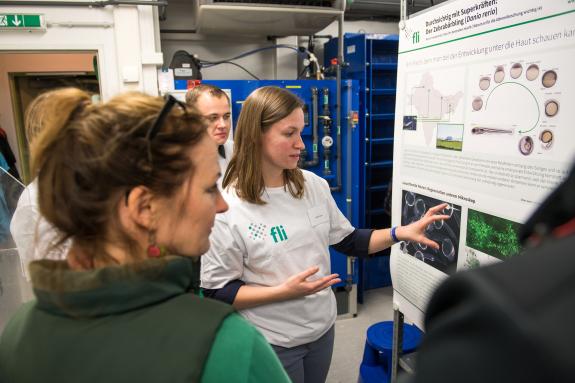
At the Long Night of Science, you can get to know our model organism for ageing research and find out how this little fish helps us to investigate the big questions surrounding ageing.