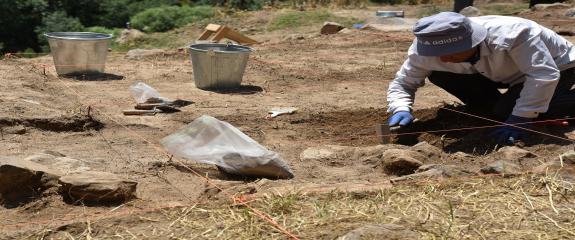
Archaeology is a science that helps piece together the puzzle of human history and reveals long-lost cultures, technologies, and ways of life. Among the most exciting methods archaeologists use to unravel these mysteries are excavations, during which they carefully dig through layers of soil to find artifacts, structures, and other traces of past human activity. Excavations are a meticulous and systematic process involving several steps, each designed to ensure that every discovery is accurately documented and preserved.
One such site that has been the focus of intensive archaeological exploration is the Yeghegis-1 rock shelter in Armenia. This site, which was inhabited during the Copper Age (ca. 5000–3500 BCE), is a key location for understanding the transition from Neolithic agricultural societies to the more complex, socially stratified urban communities of the Bronze Age. Archaeologists working at this site hope to gain new insights into the development of early metalworking, livestock husbandry, interregional connections, and settlement patterns in the South Caucasus.
The Yeghegis-1 rock shelter has proven to be an exceptionally rich archaeological site. The research team from the Max Planck Institute for Geoanthropology, the National Academy of Sciences of Armenia, and Yale University has uncovered thousands of animal bones, stone tools, and pottery shards. Copper artifacts and slag—the waste product of metal smelting—were also recovered, offering insight into the early stages of metal production that would eventually lead to the advanced metallurgy of the Bronze Age. In addition, bone objects such as bone points and beads were found, shedding light on the craftsmanship of that era.
The Yeghegis-1 excavation is a perfect example of the archaeological process in action.