Natural and Anthropogenic Climate and Environmental Change
“Climate and environmental change have always existed!” – Yes, but let’s take a closer look together at how different natural and human-induced climate and environmental change really are. We explain in simple and clear terms how the climate system works and what role the greenhouse gas CO2 plays in it. The “Climate Kit” from Ludwig Maximilian University of Munich, with its prepared materials and activities, helps us with this—and it’s highly recommended not only for classroom instruction.
To better understand natural climate and environmental change, our research group examines, among other things, lake sediments and the so-called biomarkers (“molecular fossils”) they contain, as well as their hydrogen and oxygen isotopes. “Hands-on” 😊—not just for kids—because lab work can be fun. And, of course, we’ll also present new research findings on how periods of drought and wetness have alternated over the past millennia. This helps us understand, for example, why the Iceman “Ötzi” is so well-preserved, how Hannibal was able to cross the Alps, why glaciers advanced in the Alps during the so-called “Little Ice Age,” and what role solar activity played in these processes.
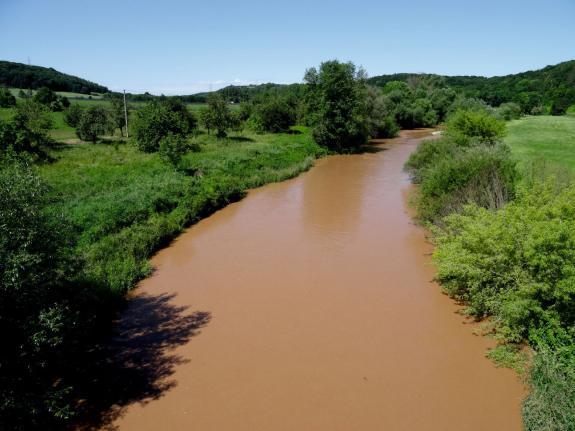
In addition to temperature changes and droughts, we’re also concerned about increasing heavy rainfall and flooding, as they can cause enormous damage. Rivers play a central role here: On the one hand, as sources of drinking and industrial water as well as transportation routes, they are essential for human societies. On the other hand, regular flooding poses a major threat to human settlements and infrastructure. We present the results of a research project on flooding along the White Elster River over the past approximately 10,000 years, including core samples that document earlier flood phases through the deposition of alluvial clay layers.