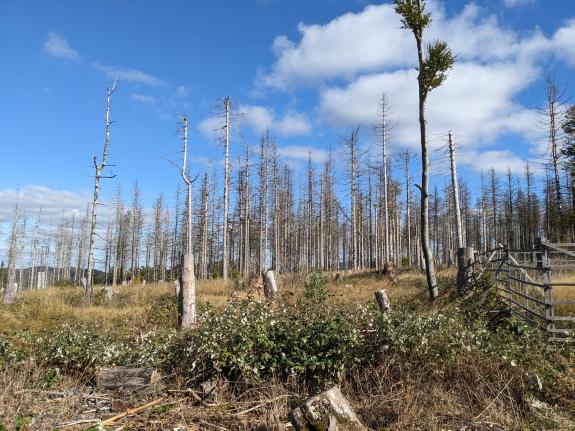
Nature-Based Reforestation Concepts in Thuringia
Due to prolonged periods of drought, pure spruce stands are highly susceptible to bark beetle infestations, resulting in the death of large areas of forest in many parts of Thuringia. In large collaborative projects, including some conducted jointly with ThüringenForst, we at Friedrich Schiller University in Jena are researching innovative approaches for the successful reforestation of dead spruce stands. For example, we are investigating the influence of deadwood on the microclimate, the planting and seeding of various tree species, and ecosystem processes such as soil respiration and decomposition. The effects of dead wood on the microclimate and soil processes are measured using various instruments. You can see some of them at our booth! We’ll provide insights into the methods used in our research project and how sustainable reforestation can be implemented in the face of climate change.