Smart and Switchable Polymers: Materials Research, Nanotechnology, and Pharmacy
Polymers (commonly referred to as “synthetic materials” or “plastics”) have become an indispensable part of our daily lives. They can be used to produce a wide variety of shapes and objects. For example, polymers are used in clothing, plastic bottles, plastic cups, CDs and DVDs, glass substitutes, and even car dashboards and mattresses. These materials are also found in paints, varnishes, adhesives, detergents, cosmetics, and more. As a result, it is virtually impossible to go about daily life “polymer-free” these days. In addition to these well-known applications, these materials are also suitable for specialized purposes such as polymer-based solar cells, light-emitting diodes, or batteries, as well as for the targeted delivery of medications in the pharmaceutical and medical fields. In many cases, material properties can be improved by using smart polymers whose properties can be addressed and switched. Such materials are the focus of current research at the Center for Applied Research (ZAF).
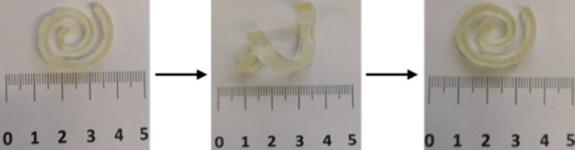
At various locations throughout the building, we are showcasing three special applications : polymers for the controlled transport of active ingredients within the body, self-healing polymers, and shape-memory polymers. In the case of self-healing polymers, damage (scratches or cracks) can be repaired through heat treatment. In shape-memory polymers, the original, “stored” shape can be restored. This opens up a wide range of potential applications for everyday life.
In our modern research laboratories, we also showcase synthesis robots for the high-throughput synthesis of functional materials, with the research results increasingly being processed and utilized through artificial intelligence. We also present key techniques for processing polymers into the desired shape (e.g., 3D printing). In addition, we demonstrate the wide range of methods available for analyzing and characterizing plastics (chromatography, mass spectrometry, microscopy, etc.).
In the cell biology laboratory, newly developed polymer-based substances are tested for their biomedical applicability. Using various cell biology analytical methods, researchers are investigating, for example, how nanoparticles are taken up by cells, how the active ingredients enclosed within them are released, and how these substances then act within the cells. The goal is, among other things, to develop novel treatment strategies for combating diseases. These specialized laboratories will also be open to the public as part of guided tours led by staff members.
We also want to promote the university as a place for education and training. In addition to studying chemistry, it’s also possible to train as a chemical laboratory technician.
Dear children: We’ve prepared hands-on activities especially for you at some of the booths!