Fantastic Fossils: Germany's Prehistoric Park
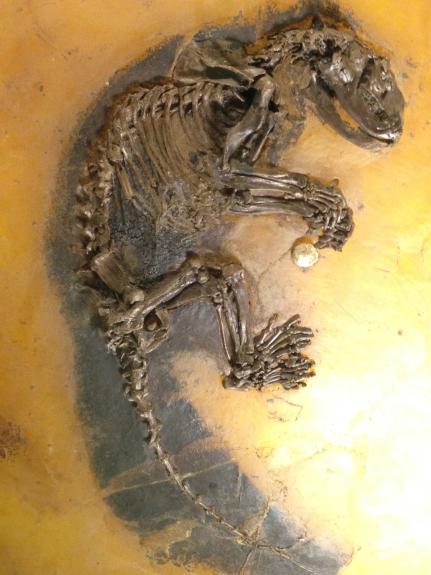
Germany is home to some extraordinary and scientifically significant fossils and fossil sites. By taking a closer look at some of the best-known German fossils, we can take a journey back in time to discover what this part of the world looked like back then and what animals once lived in these habitats. One of the earliest birds hops along the shore of an island situated in a shallow, salty lagoon: The Solnhofen limestone from the Late Jurassic period (150 million years ago [Ma]) in Bavaria is famous for the discovery of Archaeopteryx, a fossil that documents the evolutionary transition from dinosaurs to birds. In a dense tropical forest, early primates call out to one another from the trees, while prehistoric bats glide down to drink from the lake below. A tiny horse twitches its ear in annoyance: the Eocene fossil sites in Messel (47 Ma) in Hesse and in the Geisel Valley (48–41 Ma) in Saxony-Anhalt preserve the breathtaking biodiversity of paratropical forest ecosystems. Visit our booth for engaging discussions, interactive learning, and hands-on experiences with fossils.
In English (Gemma, Alke) and German (Alke)